Showing posts with label chromosome. Show all posts

Sunday, May 20, 2012

Why Women are Chimeras and Sex Determination

Genetically speaking, what makes a male a male and a female a female?  There is no uniform answer in nature:

Mammals (and some insects), as you well know, use a XX and XY system.  Essentially, if you have a Y chromosome you become a male...right?...

Reptiles/amphibians/some insects, on the other hand, use a system where if you have a different chromosome than the 'normal' you become a female.  In the lingo, you're male if you have WW chromosome and you're female if you have ZW.  *Note, the letter has zip to do with the shape.  I was told growing up that the mammal Y chromosome gets its name from the fact that it was shaped like a Y.  Not true.  It's a tiny 'x' and behaves the same as every other chromsome does, by crossing over during meiosis.  The 'x' terminology began because in early genetics they needed to give it a name and 'x' sounds cool.  ha

Some other insects have no sex chromosome, but instead the lack of an 'X' determines the sex.  They're either X or XX.

Plants, fungi, protozoans and inverts don't even use sex chromosomes altogether.

Exceptions within humans:

47 XXX - female
48 XXXX - female
47 XYY -- so called supermales
48 XXXY - Extreme Klinefelters males (a male with partial female development, like breasts, etc.)
48 XXYY - Extreme Klinefelters males

Then there's even more exceptions!  You can have XX males and XY females!  How's that?  Well, I kind of lied earlier when I said that it was the Y chromosome that make a male.  It's actually a few genes on the Y and those genes can get mutated or moved over to the X chromosome.  The most important controls testes development.  As embryos we're all females.  Then, if you have the right genes, the sex gonads get told to turn into testes.  If you don't have  that gene, then you develop as a female.

It gets even more awesome!

So, how do mammals deal with the problem of females having too many X chromosomes? If they displayed both of the chromosomes there could be some pretty dangerous developmental differences between males and females.  Well, they turn one off!  In fact, they don't just turn it off, they glom it into a blob on the side of the nucleus wrapped up in RNA and proteins in tombed so that it doesn't express.  What makes this awesome is that which X is randomly chosen.  It could be the one from the father or it could be the one from the mother.  

Translation: female mammals are mosaics!  Some of their cells use one X chromosome and some cells use the other!  Mammal males are roughly all the same genetically across their cells, but females aren't!  Their cells use different DNA!  In fact, you can have whole patches that use one X and other patches using the other.  This is called mosaicism, for obvious reasons.  In kitty cats this produces some fun fur patterns that are -only- in the females.  Basically, the dad had one color X and the mother another X and the baby displays both at once, but in different patches!  (Why patches?  Why not a blend of different cells?...Dunno.)


Barr Body in nucleus: 


Mosaicism in kitties:


This one could have happened other ways, but most likely was due to mosaicism.  One hint could come from if this cat is female.


Humans still have this.  For us the patches don't usually manifest as a calico/tortoiseshell appearance, but instead can have effects like ectodermal displaysia, which is the patching of working and nonfunctional sweat glands: 


There are other kinds of mosaicism, like that of so called chimeras, which are the result of fraternal embryos fusing together.  What makes this particularly wild is that this has been an issue with welfare genetic testing and for organ transplants.  One mother was accused of being a surrogate mother for someone and committing welfare fraud when a DNA test showed her as not being the mother of her kids (another article).  Another instance showed that a kidney transplant couldn't go through since the relatives weren't close enough genetically.

Chimerism


Pix:

Sunday, June 20, 2010

Human Evolution 'Proofs' in Picture Form

The definition of vestigial: It isn't something that has no purpose, but instead something that's primary function is now lost (secondary functions may remain).


Our ears once were gills:
Human Embryos early on have yolk sacs.  Ya, that's right; like an egg.  Weird vestige.

Prior to  birth the human testicle is inside the body cavity and then descends after birth.  The path the testicle takes isn't very logical, however.  http://phylointelligence.com/vestige.html


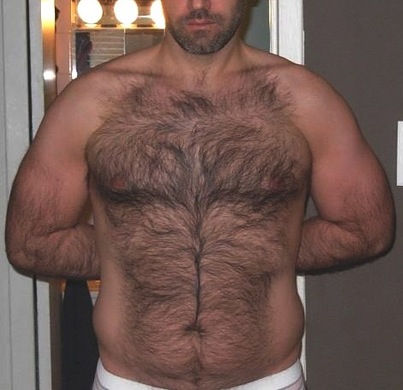
Males have nipples.  WTF?  By the way, I had the below after running my last marathon.  I always thought it was a wive's tale that got started somehow.  Believe you me.  No it ain't no lie. Must tape next time.  
Tailbones. 


Some of us can still wiggle our ears:
This pointless organ almost killed me, while in other animals it helps break down cellulose.  The appendix:
Apes of 24 chromosomes.  We have 23.  Here's the evidence that two of theirs got fused into one of ours.  Telomeres (chromosome end marks) in the middle of our second chromosome.  Makes no sense except in the light of evolution.
You know that pink corner to your eye?  Ya, it used to be a nictitating eyelid.
Our inverted retina with a blind spot.  Why don't we have an eye like an octopus on the right (we're on the left below)?  Evolution!


Look familiar?
Why the heck do we have canines?  Well, why not because we once needed them!
Goosebumps.  Pointless now.  Used to fluff us up for warmth or display of size.

Inguinal Hernias - Male testes descend from inside the body after birth.  Why aren't they on outside?  Because males and females are made from the same evolutionary template.  Male testes come down from roughly where the female ovaries are (their equivalent) through the inguinal canal.  This usually works fine, but because evolution isn't perfect it sometimes causes some nasty hernias to come through that same hole.  I'll share the most PG of the pictures I found (freaking thing to Google).


http://en.wikipedia.org/wiki/File:Route_of_vas_deferens_from_testis_to_the_penis.png
How do you like that trip above?  Imperfect design!

Olfaction Pseudogenes

We have the genes to smell a ridiculous amount of different molecules, but they've mutated since we don't have strong selective pressure to keep them.  Meaning if you don't smell all that well you probably won't die.


Our body hair faces in directions that would have aided in dripping water off of our quadruped ancestors.  I.e., they tend to face down when on all fours, belly down.


Lanugo

Around the 6th month of develpment humans become covered in a fine layer of hair called lanugo.   This hair is typically shed about a month  prior to birth.  What's it there for?  To show our ancestry!  

Baby Grasping Reflex

Babies have mega grips.  Can even hold their own weight--by one hand!  Why?  To grip momma's monkey hair!


The Clitoris

Why do women have a clitoris?  Because evolution just uses one template for men and women.  No offense, ladies, but basically it's just an underdeveloped penis.  Something similar can be said of the female orgasm.  Hence why so many women are incapable of achieving one--it's a side effect more than it is an adaptation (arguably).

The same thing's true for the g-spot or Grafenburg spot.  It's alternative name is the female prostate, because that's exactly what it is.  It's male anatomical template leftovers (fortunate leftovers, no doubt).


Retard molars.  Well, they used to be good for something.  Now they just help dentists pay for their children's college.


Vitamin C Synthesis

In humans, vitamin C deficiency causes scurvy, and can eventually cause death. We can’t synthesize vitamin C (ascorbic acid), but our relatives, save for the guinea pig and primates, were able to do so. Therefore, it makes sense that we have a vestigial molecular structure, now defunct, that manufactures the vitamin. The gene required for vitamin C synthesis was found in humans in 1994, but it was a pseudogene, meaning it was present but unable to function. The pseudogene was also found in some primates and guinea pigs, as expected. <http://www.divinecaroline.com/22178/67814-seven-evolutionary-leftovers-human-body/print>


Pharyngeal Nerve - the set up of this nerve is a throw back to our fish past.  In fish this nerve takes a direct route from the brain to the area equivalent to our larynx.  The body plan has changed significantly, but the wiring hasn't.  Since our aquatic days, evolution has pushed our heart down and moved things around so that the nerve that used to be a direct shot now goes right past the larynx (its intended destination), loops around the aorta and back up to where it belongs.  This evolutionary throw back is laughably exaggerated in the giraffe that has a pharyngeal nerve that goes something like 15' out of the way.


Jacobson's Organ


"Jacobson’s organ is a fascinating part of animal anatomy and it tells us a lot about our own sexual history. The organ is in the nose and it is a special “smell” organ which detects pheromones (the chemical that triggers sexual desire, alarm, or information about food trails). It is this organ that allows some animals to track others for sex and to know of potential dangers. Humans are born with the Jacobson’s organ, but in early development its abilities dwindle to a point that it is useless. Once upon a time, humans would have used this organ to locate mates when communication was not possible. Single’s evenings, chat rooms, and bars have now taken its place in the process of human mate-seeking." -- http://listverse.com/2009/01/05/top-10-signs-of-evolution-in-modern-man/

Plantaris Muscle
"The plantaris muscle is used by animals in gripping and manipulating objects with their feet – something you see with apes who seem to be able to use their feet as well as their hands. Humans have this muscle as well, but it is now so underdeveloped that it is often taken out by doctors when they need tissue for reconstruction in other parts of the body. The muscle is so unimportant to the human body that 9% of humans are now born without it." -- http://listverse.com/2009/01/05/top-10-signs-of-evolution-in-modern-man/ 

Darwin's Point -   plica semilunaris 

Darwin’s point is found in the majority of mammals, and humans are no exception. It is most likely used to help focus sounds in animals, but it no longer has a function in humans. Only 10.4% of the human population still has this visible left-over mark of our past, but it is possible that a much larger number of people carry the gene that produces it as it does not always cause the ear tubercle to appear. The point (shown in the picture above) is a small thick nodule at the junction of the upper and middle sections of the ear.  -- http://listverse.com/2009/01/05/top-10-signs-of-evolution-in-modern-man/
Why do we shed our baby teeth?  It's incredibly metabolically wasteful.  The likely answer is that our reptilian ancestors shed their teeth throughout their lifetime to always have a sharp, full set.  We just do it because the genes are leftovers and can't easily be shaken.


Toe nails

You could say they're there to protect the toe from stubbing, but then why aren't they on the ends?


Sweat Glands
The placement of sweat glands on our body suggests that we once quadrupedal.
http://io9.com/5984591/you-probably-dont-know-how-many-holes-are-in-your-body-right-now


Scapula
The shape and placement of our scapulas show that our ancestors were tree climbers.
   
Maxillary Sinuses
The opening to drain is on the top of the sinus, perfect only if you walk on all fours.  Like our ancestors.

http://link.springer.com/chapter/10.1007%2F978-1-4020-9980-9_7?LI=true
http://www.springerimages.com/Images/LifeSciences/1-10.1007_s10764-010-9399-1-5
http://www.sciencedirect.com/science/article/pii/S0047248407001170
http://www.sciencedirect.com/science/article/pii/S0031940605606050
http://www.answersingenesis.org/articles/2012/11/17/news-to-note-11172012
http://www.antiquityofman.com/ape-human.html


LET'S KEEP ADDING TO THE LIST!!!