Showing posts with label religion. Show all posts

Sunday, April 27, 2014

Religion Is...by Forrest Church


Religion is our human response to the dual reality of being alive and having to die. Knowing we are going to die not only places an acknowledged limit upon our lives, it also gives a special intensity and poignancy to the time we are given to live and love. The fact that death is inevitable gives meaning to our love, for the more we love the more we risk losing. Love’s power comes in part from the courage required to give ourselves to that which is not ours to keep: our spouses, children, parents, dear and cherished friends, even life itself. It also comes from the faith required to sustain that courage, the faith that life, howsoever limited and mysterious, contains within its margins, often at their very edges, a meaning that is deceptive.
— Forrest Church

Quote contexts:

http://oruuc.blogspot.com/2010/01/religion-is-our-human-response-to-dual.html

http://www.pbs.org/wnet/religionandethics/2009/02/27/february-27-2009-forrest-church-interview/860/

Sunday, March 25, 2012

Mystery Sermonette

Sermonette delivered to the Unitarian Universalist Church of Tallahassee on 3/25/12.

If there's one thing that we UUs ought to do this morning to fulfill our compulsory stereotypical quota, it's find the commonalities among all religions, right? Isn’t that what we’re supposed to do? So, to oblige that duty this morning I'll ask, what's fundamental to every religion? Below all the vast differences, where's the bedrock lie?

Well, ask 5 Unitarians and you'll get 50 answers, but I'll add one more to the pile. A religion can't make it, can't function, can't hack it without one thing--mystery. Like some kind of perverse addiction, humans desperately seek out mystery. No where is this fascination with mystery more evident than in four fundamental aspects of the human experience: sex, stories, science and religion.

First off, sex:  Cognitive developmental psychology explains that one of the mechanisms that drives the formation of our sexual attractions is an affinity for difference (I’m told this is true for homosexuals as well). We look for differences and are drawn to them. We seek out mystery in romance. We want a tease. As it's said, if you want sizzle, you've gotta leave something to the imagination. Mystery lights up our brains and our romance.

Stories:  Have you ever thought about how weird our fascination with stories is? Why do we spend billions and billions and billions on movies, books and TV? We, "Just gotta know how it ends!" We despise and yet are addicted to cliffhangers. Good writers know this. They know that it's often what you /don't/ say, don’t show that is more important than what you do say--the monster you never see the face of, the whodunit, the love that may or may not find consummation. We're desperate to solve a mystery.

Science: Some of science is solving practical problems so that we can fix everyday life problems, but a huge portion of science has been and always will be just for the sake of knowing, because we're curious--mysteries of consciousness and how the brain works, the uttermost stretches of outer space, the existence of extraterrestrial life, the inner workings of the quantum realm, the pageantry of our planet's evolutionary history. Each unanswered question draws a deep part of ourselves that doesn't just want to know, but wants to find out; to search and not just to obtain.

Religion's no different: German theologian Rudolph Otto gave us the term 'mysterium tremendum' to describe the sense of 'holy' or 'god', a 'tremendous and terrible mystery' that we desperately seek out in life to worship. Our religious preoccupation with the mysterious abounds in the form or paradoxes and secret knowledge in religion--the nature of the Trinity, the path to Enlightenment, the paradox of free will, the duality of spirit and matter, prophecy, secret incantations, hidden codes, the list continues.

Einstein said it best:

"The fairest thing we can experience is the mysterious. It is the fundamental emotion which stands at the cradle of true art and true science. He who knows it not and can no longer wonder, no longer feel amazement, is as good as dead, a snuffed-out candle. It was the experience of mystery--even if mixed with fear--that engendered religion. A knowledge of the existence of something we cannot penetrate, of the manifestations of the profoundest reason and the most radiant beauty, which are only accessible to our reason in their most elementary forms--it is this knowledge and this emotion that constitute the truly religious attitude; in this alone, I am a deeply religious man---Enough for me the mystery of the eternity of life, and the inkling of the marvelous structure of reality, together with the single-hearted endeavor to comprehend a portion, be it ever so tiny, of the reason that manifests itself in nature." --Einstein

Mystery inspires, inflames, enlivens, seduces, captivates, fascinates, terrifies and brings us to tearful awe. Mystery is religion at its deepest core because mystery is the fundamental response of the universe to our most basic questions. As the songwriter Iris Dement put it,

"Everybody's wonderin' what and where they all came from.
Everybody's worryin' 'bout where they're gonna go when the whole thing's done.
But no one knows for certain and so it's all the same to me.
I think I'll just let the mystery be."

Monday, January 16, 2012

Detachment in the Bhagavad-Gita


“When he [, the virtuous person,] renounces all desires and acts without craving, possessiveness, or individuality, he finds peace.” Bhagavad-Gita 2:71

“Always perform with detachment any action you must do; performing action with detachment, one achieves supreme good.” Bhagavad-Gita 3:19


"If you cannot take to this practice, then engage yourself in the cultivation of knowledge. Better than knowledge, however, is meditation, and better than meditation is renunciation of the fruits of action, for by such renunciation one can attain peace of mind." 12:12

"Disinterested, pure, skilled, indifferent, untroubled, relinquishing all involvements, devoted to me, he is dear to me. He does not rejoice or hate, grieve or feel desire; relinquishing fortune and misfortune, the man of devotion is dear to me. Impartial to foe and friend, honor and contempt, cold and heat, joy and suffering, he is free from attachment. Neutral to blame and praise, silent, content with his fate, unsheltered, firm in thought, the man of devotion is dear to me. Even more dear to me are devotees who cherish this elixir of sacred duty as I have taught it, intent on me in their faith" 12: 16-20


*I’m writing this blog because, in many ways, I don’t get it.  Why is detachment and dispassion such a focus in Hindu and Buddhist teachings?  Raised in a Christian, Western culture I was told to believe the opposite.  The central mindset and call to action is to worship and love--two very emotional, attached actions.  As I’m currently reading through the Bhagavad-Gita I’m forced wrestle with what ‘detachment’ means and how it can be helpful to our every day lives.

Broadly and summarily, religion are sets of ideas that help us navigate life and reality as we understand it.  Some of the worst maelstroms in life to avoid are:
  • Regret/Guilt/Shame--negative feelings about the past
  • Disappointment/Anger**--negative feelings about the present
  • Fear/Dread--negative feelings about the future

Christianity and many other religions tend to deal with these emotions through doctrines on:

  • Forgiveness-- “What’s wrong has been dealt with.”
  • Providence/Predestination-- “It was meant to be.” “It will all work out.”

One way of looking at it is that Hinduism/Buddhism tends to take a much more personal role in dealing with negative emotions.  It isn’t God that is the one that will fix everything nor is reinterpretation of the problem. We must be separating ourselves from the cause of the pain--desire.  On some level we’ll always be disappointed by reality, however you can’t be disappointed if you never wanted anything in the first place.  This is the Eastern solution--don’t desire, be detached and you can’t be hurt.

In many ways, I’m resistant to this thinking.  I want to feel deeply.  I want to love.  I want to be attached.  And I should.  But, I also need to learn from the wisdom of the ancients.  There is truth and power in detachment by:

  • Realizing that emotions are both involuntary and a choice.  They’re a choice in so far as we have the ability to reinterpret and refocus our minds.
  • Gain perspective.  Are we going to care 10 minutes, 1 month, 1 year, 10 years down the line?  What would this situation look like from someone else’s perspective?  From an aliens?  From a deity’s?
  • Strive towards objectivity.  Our emotions aren’t reality.  They’re but one possible interpretation of reality.  
  • Pain and loss are inevitable. Life is in Buddhist terms 'dukkha', often translated as suffering. Everyone you love will die, your material wealth is transient, life is disappointing. Spiritual maturity is making a transition from the dependence on the ephemeral outside world for happiness--relationships, material wealth, comfort--to an unshakeable internal state of blessed felicity. That requires one to disconnect one's self on some level from the pain and disappointment of life to make it through.

It is interesting, though, that even in the very first verse above, and other context verses, might be paraphrased as something like, “Don’t feel because it feels good to not feel.”  Or, “Don’t desire anything...Except desiring to not desire.”

Now, I know I have much to learn about Eastern philosophy and I’m sure there are solid apologetic explanations of the above objections, but even without having figured it all out I know that practicing detachment from negative emotions has improved my life.  I shall continue and hope to both grow in understanding and in constitutional fortitude to be able to.

Your feedback is welcomed.


Online version of Bhagavad-Gita: http://www.bhagavad-gita.us/ 


*Please be fully aware that I’m a complete greenhorn concerning Eastern religions.
**Anger can be towards the past or future, too.


Post script:


Categories of things that one could be detached from, written to consider what contexts detachment might be helpful:


  • Relationships - As Shakespeare put it, "Tis better to have loved and lost [your mind through suffering a ridiculous amount of emotional pain and anguish] than to have never loved at all." Relationships are worth it. People are worth it. The pain is worth it. Don't detach.
  • Emotions - See above. What a shame and a loss if we can't fully experience all the fullness of the possible emotions that humans are capable. Tis a blessing even to sorrow. A friend, Sara, recently shared this quote with me by Antonio Porchia, "Man, when he does not grieve, hardly exists."
  • Reality - I'm going to go a head and say that life is better lived in reality. Perhaps that's debatable, but not for me (most of the time ha).
  • The experience of the moment - Detach from experiencing fully the moment? Living every breath? Every heart beat? Thought? Experience? NEVER!!
  • "Fruits of actions" - Much of what the Bhagavad-Gita refers to as needing to be detached from is the consequences of our actions. The author(s) are not the first I've heard this from. Bill Bright, a conservative Christian and founder of Campus Crusade for Christ put it like this, "Act in the power of the Holy Spirit and leave the results up to God." Things will not ever work out like we think they will. Those kinds of expectations are a sure fire recipe for disappointment. The Bhagavad-Gita advises us to not worry about that. Just worry about doing the right thing--our "sacred duty" or dharma. Beyond that things, by faith, just have a way of working out. :)
Perhaps the best summary (for me) is to be detached from expectations. Is there something you must have in order to be happy? Some thing? Some person? Some event? Then you're a slave to it. Detachment, of a certain kind, is freedom. If things go well, then all the more reason to be grateful and blessed. If they go poorly, how can we be disappointed if we had no expectation of how they'd go in the first place?


Post post script:


A Christian friend objected, "How is hope or faith different from expectations?" Where's the room for hope?  Must we be divorced from hope to not have any attachment to the fruit of actions?

Post post post script:

I like the word 'independence' better than 'detachment'.  It implies the ability to love and enjoy without being controlled and at the whim of life, which can be full of negativity and suffering.

Sunday, May 8, 2011

How to Appreciate Other Religions/Political Parties

This isn't compromising your beliefs.  Keep your beliefs, but learn how to appreciate where others are coming from, too. Even if for no other reason than to understand how to change their mind better!!

  Do you ever feel like you can't bring up the dual conversational unmentionables--politics and religion--without getting frustrated or upset?  Read on then!

  • Finding Common Ground
    • Values
      • Many times beliefs are different ways of expressing the same values.  It's tragic that we don't realize this enough.  Let me give some examples.  
        • Healthcare in the US--to definitely and admittedly oversimplify, one group thinks it barbaric to withhold proper medical care to the poor in one of the richest countries in the world.  Why?  Because they care about people.  That's the heart value that drives their beliefs.  The other side doesn't want universal health care because they think it will drastically reduce the quality of the care and further dig America into a debt hole.  Why?  Because they care about people.  Same value.  Different application.  Different way of serving that value.
        • How about another extremely heated topic--abortion?  One side says abortion is wrong and their value is that human life (the baby's) is precious.  The other says abortion is morally permissible because life (the mother's) is precious.  Each can say one side is mistaken or deluded, but it helps me to avoid vilification to understand what value is driving the person's belief and often how drastically similar they are to mine--trying to protect a life. 
        • Remember to remember why people are passionate about causes--they care!  They really love something!                                                                                                                                                                                                                                                                                                                                                                                                                                                                                                                    


    • Questions
      • You may not have the same answers as someone in a different religion, but many times your heart is still crying out the same questions.  
        • What's the purpose of my life?  Help/love others, glorify God, attain enlightenment, jihad, etc.--all different answers to the same question.
        • Where did I come from?  God, evolution, God+evolution--different answers, same heart cry.
        • How can I live on past death?  Nirvana, Valhalla, Heaven, Moksha, legacy, etc.--same desire for ourselves and our loved ones--that we'll live on in some respect. 
  • Debating Safely
    • Get Down to the Fundamental Question of the Debate
      • E.g., the fundamental question surrounding abortion is, when does a human become a human?
      • For universal healthcare it may be something like, what is the role of the government?  What are inalienable human rights?
      • Getting down to the fundamental question that is actually being debated has two positive effects:
        • Clarity is brought and distraction can be set aside
        • It can show how gray the subject really is.  Highlighting ambiguity builds compassion and patience over disagreements.

  • Understanding Differences
    • Reactionaries
      • Show me an extremist, a fundamentalist, a fringe voice and I'll show you a reactionary.  People that have extreme views or ways of expressing themselves aren't usually crazy--they're trying to use a valuable communication tool--contrast.  E.g., the most drastic tree hugging environmentalists aren't off the wall--they're trying to live and speak in such a way that shouts above the distracting hum of life.  If the rest of us actually cared like we should they wouldn't have to go to such extreme measures of living/behaving/communicating.  They aren't crazy.  They're just trying to get heard.  Same with any other example from religion, politics--fundamentalism, conservatism, liberalism, etc.  Don't hear what/how they're saying it so much as you hear their heart and what they're contrasting themselves with.  Furthermore, recognize the importance of reactionaries in society--nothing would change (as it needs to) without prophets, heralds, extremists, fundamentalists.  Find the middle ground between the two polar opposite extremists and you'll often find the truth.


    • False  Dichotomy 
      • Maybe you're both right
      • 'Either' / 'or' thinking  vs. 'both' / 'and':  Sometimes it isn't 'either' this 'or' that.  Sometimes it's 'both' this 'and' that.
      • Perhaps the goal isn't about promoting one ideology and eliminating the other, but instead listening to both sides and finding a balance.
      • Different Kinds of Truth
        • A person, religion or political party can be dead wrong about one category of truth, but on the money in another.  This may sound strange to your ears, but hear me out.  What is truth at its most fundamental level?  An idea that helps you deal with reality, life, yourself, others.  Truth is a mental tool to navigate reality.
        • Philosophical Truth
          •  E.g., 'a' can not be 'non-a' at the same time and in the same sense.  That is absolutely true, but it is a very different kind of 'true' from the next kind of truth.
        • Empirical Truth
          • The kind of truth you get from a laboratory, an experiment, a test tube--the sciencey kind.  You're manipulating, removing and isolating variables to test a hypothesis.
        • Descriptive Truth
          • The kind of truth you get from the field, observations.  Your paying attention in order to learn something about a process, correlation, potential causation, etc--seeing patterns.
        • Historical Truth
          • Can't test it, can't observe it, but many of us would agree that it exists (at least beyond a reasonable doubt).  We  believe in it so much that we bet people's lives on it. #CapitalPunishment
        • Ethical Truth
          • "Do unto others as you would have them do unto you."
          • "Don't do unto others as you would not have them do unto you."
          • Instead of completely discounting a religion's holy scripture because you disagree with its empirical, descriptive truth maybe it is time that you started to appreciate its ethical truth and the next category below.
        • Proverbial/Wisdom Truth
          • "It is more blessed to give than to receive."
          • "A bird in the hand is worth two in the bush."
          • "Don't look a gift horse in the mouth."
          • "Don't remove a fly from a friend's head with an axe."
          • "Let he who is without sin cast the first stone."
          • "Go to the ant, thou sluggard; consider her ways, and be wise."
          • If you really care about living life well you'll learn to appreciate wisdom from surprising and unexpected places.  You can learn a lot from a heretic.
        • Artistic Truth
          • Good literature, art, movies, mythology, comedy can often leave us saying something like, "That is sooo true."  (Especially good comedy.)  Art can get us to realize something that was right in front of us, but hadn't seen before.  It can resonate our deepest, inmost being.
          • Paradigmatic Truth
            • Gives us a framework to think within, a scaffolding to build understanding.  This is true both in science and in religion.  The easiest example I can think of is light.  By analogy we speak of light as being a particle and a wave.  In reality it's neither.  And both...Speaking of light as a wave and a particle may not be true in a literal sense, but incredibly true in a paradigm sense and is enormously beneficial for scientists.  (The same could be said of String Theory, analogies for dimensions greater than three, etc.)  In a similar, analogical, paradigmatic way religion can be similar.  It doesn't have to be true to be a helpful way to think about the universe and that has great and significant value.  More thoughts here.


        • Perfectly Understandable Reasons That People Will Never Change Their Minds
          • Trust (see more below)
          • Loyalty: Is it really reasonable to expect people to turn their backs on their friends and families ideology?  
          • Identity:  Is it really reasonable to expect people to give up their ideology and have to complete refigure out who they are?

      • Concessions - Why It Isn't So Bad After All
        • Good vs Right: Maybe not everyone has to be right.  Maybe being just being good isn't such a bad concession.
        • Intermediary Beliefs: Can you imagine going to a remote tribes person and trying to explain the internet to them?  Before you could explain what the internet was you'd have to explain what a computer was, but to do that you'd have to explain what a machine was and then you'd have to explain what electricity was and then you'd have to explain...Historically maybe mythology and a great many false ideas were an essential stepping stones that absolutely had to be used to us where we are today.  Maybe we owe today's stepping stones a great deal of deference for getting us where we are today and for taking us to a better tomorrow.
        • Beliefs Have Functions
          • To balance out extremes: Polar opposites might be a way that the cybernetic system of society maintains balance.
          • For the greater social good: Maybe the ideology that you're frustrated that someone you know believes is the only thing holding back anarchy in their life and in society at large?  Maybe you're completely unaware of all the positive ripple effects it is causing and that if you were aware of them you'd shut the h*ll up and not argue with them so vociferously.  


        • Justified False Beliefs
          • People for thousands of years people thought the Earth was flat and that the Sun moved across the sky.  They weren't idiots and they weren't suppressing the truth.  They were justified in their belief based on what they knew.  We'd all do well to remember that each one of us is a product of our culture and that in other's shoes we'd believe the same thing as they do.


        • Attribution
          • Malevolence vs. Benevolence: We have a choice in how to interpret people's beliefs--either negatively like they're stupid or maliciously denying truth or positively like they're trusting individuals or they're trying to protect something precious or they're acting out of a pure intentions/heart, etc.  It is far, far more likely that their beliefs are a reflection of their virtue and not their vice, strength and not weakness--their deep seated convictions and character.  Remember that.
          • Internal vs.  External:  Are  they the devil or are they a victim of the devil?? Kind of nature vs. nurture.  Does a person believe something because they are a certain way or because they were raised a certain way?

        • In-Group / Out-Group--Evolution's Legacy
          • In our evolutionary past it paid to:
            • Trust insiders unquestioningly.  If you want to take down a woolly mammoth together you have got to have each other's back without hesitation.  This legacy lives on in the tenacity we hold on to cultural beliefs even far past their expiration date.  Why wouldn't a person trust what ever their parents or an authority figure says?  Why would people lie to them?  Trust is a very good thing and the very reason  human society has come as far as it has.  Remembering that can help us see eye to eye with people we disagree with.  Consider your own beliefs.  How much do your beliefs line up with your chosen group's?  That might not be such a good thing...
            • Distrust of others.  Let's face it.  We have a violent past.  There were time periods in our history in which something like a third or a quarter of all adult males died in battle (proof for this can be seen in the numerous bashed in skulls we've found and from comparing with current day tribal communities).  If you didn't distrust outsiders you died.  Therefore, our default state is to distrust anyone that is different--skin color, ideology, religion, political party, etc.  Distrusting and vilifying outsiders got us ahead in the past, but now it only hurts us and the world.  When you find yourself thinking in terms of 'us', 'them' remember where that distrust comes from and then remember to expand your circle.  The most important 'we' today includes everybody.  E.g., get beyond 'Republican' and 'Democrat' to something larger like 'Human'.

        • Simian Simpletons
          • What is the evolutionary purpose of our brain?  Survive and reproduce.  Not think rationally and critically.  It isn't to understand science, math and logic.  It is much, much more of a relationship machine than it is a computer.  It should be more shocking to us that we ever think logically than that we sometimes have lapses in judgement.  Be patient with your fellow humans.  They're doing the best they can.

        • Leaders of Movements and Movements Are Different
          • Sarah Palin doesn't represent all Republicans.  Osama Bin Laden doesn't represent all muslims.  Benny Hinn doesn't represent all Christians.  Child molesting priests don't represent the entirety of the Catholic faith.  Stop mixing up movements and leaders.  They're different.  Knock it off.  :)

        • You Could Be the Wrong One
          • Don't forget it.  
          • Ever.  
          • Ever.

          • Maybe We're Better Off Disagreeing
            • Seeing things differently is
              • Enriching: ‎"The best way to have a good idea is to have a lot of ideas." --Linus Pauling
              • Sharpening: Is anything more stimulating and growing than a good debate?

      Pictures from here, here, here, here, here, here, here , here , here , here and here.

      Saturday, March 5, 2011

      Irrational Things Atheists Believe


      We all believe irrational things--things that are subjective and not empirically testable.  

      Is this such a bad thing? Is it even possible to live without the scaffolding of these ideas and many, many others? What would life be like without these kind of ideas? Can noticing these ideas give us humility and more level playing field when dealing with/thinking about/talking to people that believe things that seem utterly foreign and ridiculous to us?


      • Epistemological Beliefs
        • Reality is Coherent--As Einstein famously put it, "God does not play dice."
          • How we live like reality is coherent: 
            • Science invests billions of dollars into research.  Many of our expectations about what life will be like on a given day are met.
        • Reality Is Not an Illusion--Is what you see what you get?
          • How we live like reality is not an illusion: 
            • We find love and life meaningful.  
        • Continuity of Reality-- "We have no logical reason to assume that anything we've learned from science will be true tomorrow." --Cameron Green
          • How we live like reality has continuity: 
            • We act according to our experience.
        • Causal Relationships--One thing leads to another--cause and effect. How do we know that when one cue ball hits another that the two events are actually connected? The philosopher David Hume wrote much on this conundrum.  
          • How we live like causal relationships are determinable:
            • We administer medical treatments.  We write and read history books.
        • Memory Is Accurate--How do we know our most trust and dearly held memories are accurate?  How do we know our brain didn't just make them up and they seem real?
          • How we live like memory is accurate:
            • We go up to and kiss our loved ones when we see them again.  We cherish fond childhood memories.  We recall and use information like directions to get to work.
        • Senses Are Reasonable Facsimiles of Reality--How do we know that we can trust our senses?  How do we know they correspond to reality at all?
          • How we live like our senses are accurate:
            • We follow traffic signs and lights.
        • You’re Not Completely Crazy--Is it so crazy to think we're not crazy?
          • How we live like we aren't completely crazy:
            • We make decisions and live by them.
        • Solipsism Is False--How do we know others are thinking, feeling, volitional beings?
          • How we live like solipsism is false:
            • We care for the needs of others.

      • Existential Beliefs 
        • Life Has Value--Funerals suck.  War sucks.  Abuse sucks.  Why?  Because life is precious.
        • Life Has Meaning--What we do with our lives has some value otherwise we wouldn't keep doing it.
        • Identity/Consciousness/Mind--We believe in ourselves and others as a whole, independent being rather than a talking set of individual neurons and atoms.  Attributing a volitional personality to a human is the same thing on a different scale to giving the random occurrences of 'life' and 'the universe' to 'God'.  
        • Contiguity--Many have said (controversially) that every atom in your body is replaced every ten (or seven) years. Assuming something close to that is true, how can it be said that we're the same person? Yet we still believe it every time we see an old friend! 
        • Free Will--Our choices are our own and not a mechanistic predetermined byproduct of things outside of our control. 
        • Love--It's more than a hormone. It's more than a pre-programmed mechanism to create and rear young. We believe and behave like love is real.
        • Justice Beliefs
          • Virtue/Vice and Good/Evil--Every time we resist evil and do good we show that we believe in moral obligation/virtue/vice/good/evil.
        Brenner Emmanuel Michel's "Hercules Between Virtue and Vice"
        My point:


        Of course all of the above has rightly been questioned and doubted by philosophical luminaries, but I bring it up to point out that both you and I have sacred ideas and that we all hold things true without proof everyday. That, by in large, is a very, very good thing. You may well cognitively doubt every idea above, but you still believe them functionally if you use them. Just as many believers deal with doubts about their religion's teachings so can an atheist doubt the list above, but still be counted as a believer on the basis of how they live--actions speak louder than words.


        What is religion at its most very basic? Ideas. Ideas about life, morality, metaphysics, origins...etc. Just in the same way that believing life has value has existential and social utility so can other religious ideas--even if we deeply doubt their veracity. Ideas are tools--tools that can help improve our lives by being the scaffolding on which to build a life. What I'd like to show with the above list of things is that there is common ground between atheists and theists to discuss ideas, values and meanings. We all are subjective. We all are biased. We all operate with ideas that are unfounded. We all have memes.  It's a level playing field between atheists and theists in this regard. We all make assumption leaps and some of these ideas are vital to living a fulfilling life.

        Pictures from here, here and here.

        Monday, December 6, 2010

        Science as Myth Part I of II

         Note: these are sketch notes from my presentation at UUCT. They aren't meant to read like my typical blogs. Some of the below was in my presentation and some of it is clippings from the cutting room floor that I thought were great, but not conducive to my presentation 's thrust. Thus, the below may seem a little scattered.


        • Intro quotes to the topic of science and religion.
          • “I am absolutely convinced hat science is vastly more stimulating to the imagination than are the classics, but the products of the stimulus do not normally see the light because scientific men as a class are devoid of any perception of literary form.” JBS Haldane
          • “The next great task of science will be to create a religion for humanity.” --Lord Morley
          • “New ideas, usually classed as scientific, have permeated a large section of the community and prevented them from belonging to any of the established churches, whose belief in miracles, in revelation, in the inspired authority of the Bible, runs counter to the established truth, as the scientifically trained see it. The problem is to make a religion for these men and women, whose numbers are bound to increase with the spread of education, and who will otherwise be left without a religion, or with one to which they cannot whole-heartedly give their assent. The conflict between religion and science in the last half-century resulted in the complete defeat of religion's claim to impose its view as authoritative on man’s mind, but it did not build up anything for those whom it emancipated. That reconstruction is our problem today.”--Julian Huxley
          • “We can keep from a child all knowledge of earlier myths, but we cannot take from him the need for mythology” Carl Jung

        • Purpose of myth - What's function? Purpose? Why is every religion largely collections of myths? Why is the Bible a story book and not a theological disertation?
          • UNI(one)VERSE(many)
          • Identity - Who am I? Identity supersedes activity. We must know who we are.
          • Worth - is the universe/humanity/I good? Can I trust the universe/humanity? Can I open myself up to loving and being vulnerable others?
          • Awe/Mystery - What is my context? People must have something greater than themselves to worship or we worship ourselves.
            • “The most beautiful thing we can experience is the mysterious. It is the source of all true art and all science. He to whom this emotion is a stranger, who can no longer pause to wonder and stand rapt in awe, is as good as dead: his eyes are closed.” Albert Einstein
          • Sacred/hallowed -
            • What is sacred to you?
            • ‘reverence for life’
          • Morality - How should I relate to others? How should I live? Moral compass to avoid shipwrecking.
          • Evil/Devil - “A movement can exist without a god, but never without a devil. There has to be an enemy to be destroyed." --Tony Campolo
            • Who is our devil?
          • Gratitude - is life worth it? Gratitude is the secret to happiness.

        • “The evolutionary epic is probably the best myth we will ever have.” EO Wilson
          • Why so ineffective then?
          • Why 40% of America not believe?
        • What are ways we tell history of universe poorly?
          • How not to tell:
            • Anti-Gospel - biological history is a history of aggression, dog eat dog, “Struggle for Life” “war of nature, from famine and death” --Darwin , Malthusian, heat death of universe...
            • Facts versus story
              • All we are? 4 nucleotides, 22 amino acids and one millionn billion cells? If so, of course people don't give a flip.
        Star Dust - Children of the Cosmos - Our Atomic हिस्टरी


          • For thousands of years we got our mythology, the heavens. Nothing has changed!!
          • Before you were a  twinkle in your mother's eye you were a twinkle in a star!!!
          • The true alchemists: stars!
          • 1% of the static on an old tv set is caused by microwave radiation background noise from big bang
          • Hydrogen is a light, odorless gas, which, given enough time, turns into people.' --Dan Wallach
          • Smile at the person next to you. Think about the awesome fact that the calcium in their and your bones and teeth is formed by the process of nucleosynthesis deep within the core of a star or in a nova event.
          • Press your fingernail and watch the red blood fill your flesh again. Why red? Iron. Same message.
          • Supernova overview: Once iron core, no more fusion fuel - core collapses into neutron star whose gravitation force causes an outer layer collapse at 70 km/s that causes it all to undergo nuclear fusion in a matter of seconds causing a bounce back shock wave making heavier elements and the light of 4 billion suns, or all the energy of the sun’s entire life in a matter of moments at 10k miles per second.
          • Who wearing gold/jewelry? Those heavier metals only formed in super novas.

        • We have right place in galaxy.
          • close in for heavy elements
          • far out for gamma radiation.
        • “If the stars should appear one night in a thousand years, how would men believe and adore; and preserve for many generations the remembrance of the city of God which had been shown! But every night come out these envoys of beauty, and light the universe with their admonishing smile. The stars awaken a certain reverence, because though always present, they are inaccessible, but all natural objects make a kindred impression, when the mind is open to their influence.” Ralph Waldo Emerson in “Nature”
        • “We are the local embodiment of a cosmos grown to self-awareness. We have begun to contemplate our origins: starstuff pondering the stars!” --Carl Sagan on Cosmos series
        • To you ladies, the next time someone asks you how old you are now you have a new response
          • I am 13.7 b y old
        • Eschatology
          • We need to have care in how we speak about death and end times.
          • Resurrection
          • We have our life through the Death of Stars - Connie Barlow
          • Circle of Life
          • Legacy

        “Middle World” Dawkins
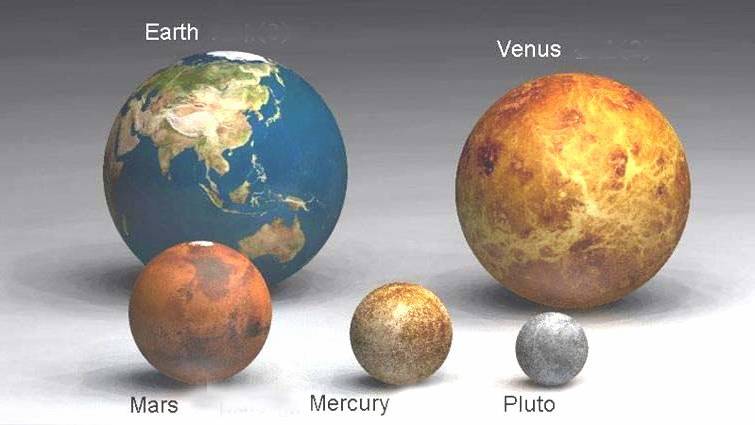
          • Large Scale - (Pictures below) Earthrise (230k miles away), Mars Lander Pic (about 50ish million miles), Pale Blue Dot picture from Voyager 1 (3.7 billion miles)
          • If the Earth was the size of a basketball:
          • Proxima Cetauri - 4400miles. Driving distance from Tallahassee to Anchorage, AK
          • The Milky Way is about 100,000 light years in diameter. We would have to make our model 100 million miles wide. This means that to make a model of our galaxy where our sun is the size of a basketball, our model would have to reach from the sun to a point some 10 million miles beyond the earth.
          • The edge of the universe, if it's proper to talk about the universe having an edge, is thought to be about 15 billion light years away from us in all directions. Distances this large are incomprehensible. To extend our model to include the entire universe we would need all the space between here and Alpha Centauri


          • “Telescopes are time machines.” Carl Sagan
          • So old that stars as we seem them must look completely different in reality
          • So old in completely different location
        • Huble Deep Space
          • 3,000 galaxies in shot with 100 bil stars each
          • picture size of grain of sand at arm’s length
          • 125 billion galaxies


          • 70,000 million million million stars. That's the total number of stars in the known universe, according to a study by Australian astronomers. It's also about 10 times as many stars as grains of sand on all the world's beaches and deserts. 7 followed by 22 zeros or, more accurately, 70 sextillion
          • When we recognize our place in an immensity of light years and in the passage of ages, when we grasp the intricacy, beauty and subtlety of life, then that soaring feeling, that sense of elation and humility combined, is surely spiritual.” --Carl Sagan in The Demon-Haunted World

        • Small
          • If you were to blow up an atom to the size of a stadium the nucleus would be the size of a fly.
          • If an apple was magnified to the size of the Earth, then the atoms in the apple would be approximately the size of the original apple. --Richard Feynman

        • Mysteries Universe - How much we don't know
            • Now my own suspicion is that the Universe is not only queerer than we suppose, but queerer than we can suppose. I suspect that there are more things in heaven and earth that are dreamed of, or can be dreamed of, in any philosophy.” JBS Haldane

          • 4 Fundamental forces
            • We have no a how the four fundamental fources work. I mean, why don't electrons (negative) and protons (positive) collide? We have no idea!
          • Matter - what is matter made of? What are quarks? Are they made of smaller subatomic particles?
            • Electron spin revolves 6.568*10^15 rev per second at much the speed of light
          • Time - Is it an illusion? Why is that as you approach the speed of light that time slows down?  Why is that massive bodies have slower time nearer to them (in comparison.
          • Space - quantum entanglement - electrons created at the same time separated by hundreds of kilometers behave and spin connectedly. Is space an illusion? Is all matter entangled?

          • Electro-magnetism
            • Light - double slit experiment - two slits - interference patterns - what happen if you shoot one photon through slits? - interference patterns - goes thru 1, none, left, right simultaneously - observe it only goes thru one - knows it’s being watched...

            • If you thought of the electromagnetic spectrum as a movie real running 2,500 miles from Tallhassee to San Francisco, CA, visible light would be one frame on that reel.


            • Close eyes. Every second, about 65 billion (6.5×10¹⁰) solar neutrinos pass through every square centimeter on the part of the Earth that faces the Sun. (no charge, no interaction)
          • Darks - expanding at an increasing rate? What is 90% of the universe? We have no freakin' clue.
        • Sun Worship - Children of the Sun - Our Chemical History
            • Pop quiz: What's the closest star to us? THE SUN! Duh!
            • Fusion Solar Power is what the Earth runs off of
            • Did you guys hear the news? Fusion power on Earth has been perfected over the weekend. (Punchline is that fossil fuels are stored fusion power of the sun)
            • Hey, did you guys hear? I just bought a solar powered car that can go 120 miles per hour and accelerates from 0 to 60 in about 6 or 7 seconds. (Punchline is that fossil fuels are stored solar power)
            • Think about this. The Olympics are just a masterful symphony of solar energy being expended.
            • Drinking soda is drinking solar energy (the sugar is stored solar energy).
            • Bite in Steak- stored fusion energy!


          • Potosynthesis
            • Is bombarding photons and exciting electrons to transfer energy.
            • Base of ecology of ecosystem
            • Predators eat herbivores which eat plants which eat sunshine. So, indirectly we all eat sunshine!!(being overly simplistic)

         
        Solar Powered

        Solar Powered

        Solar Powered
        “For the first time in human existence, we have a cosmic story that is not tied to one cultural tradition, or to a political ideology, but instead gathers every human group into its meanings...We are now creating the common story which will enable Homo sapiens to become a cohesive community. Instead of structuring American society on its own human story, or Soviet society on its own human story and so on, we have the opportunity to tell instead the cosmic story, and the oceanic story and the mammalian story, so that instead of building our lives and our society’s meanings around the various human stories alone, we can build our lives and societies around the Earth story.” 
        --Brian Swimme from “The Cosmic Creation Story” in The Reenchantment of Science

        Sunday, September 5, 2010

        Are Humans Evolved to Be Religious?


        I see several things wrong with this question.  First, to say that we’re hard wired to be religious is a lot like saying that we’re hard wired for video games, porn or to really like Rocky Road ice cream.  Yes, there are reasons that we like those things, but we couldn’t have evolved for them.  They’re far, far too recent.

        Secondly, which religion are we referring to?  It’s axiomatic that there are quite a diversity of religious ideologies - one god, two gods, no god, four, one after life, many afterlives, laws, prayers, meditations and on and on.  That makes it difficult to say that we as a whole have evolved for a particular religion.

        With that being said, I do think that there are psychological proclivities that we can look to explain the reason why a robust majority of the world is profoundly religious.  I’ll just touch on a couple that stick out to me.

        1. Trust

        It’s been quite selectively advantageous for our ancestors to trust each other--knowing which snake not to pick up, which leaves are medicinal/poisonous, how to make a stone tool, learning vocabulary/syntax, how game are migrating, where a watering hole is and so on and so forth.  The ones that didn’t believe their elders went the way of the dodo.  Those that unquestioningly accepted what they were told even if they didn’t understand it were more likely to survive.  Stated in the positive is that we’re communal thinkers.  We think best together.  There are, however, times when this backfires.


        2. Creative vs. Logical

        As a species, in my opinion, it has been more advantageous to be a creative story teller, a shaman, a mythologizer than it has been to be a critical thinker, a questioner, a logician or a mathematician.  Thus, why we fabricate and then believe the things we do.

        3. Animate thinking

        If you hear a bump in the night, is it better to assume that it is a threatening beast or a harmless branch falling?  It’s been selected for to err in the direction of being overly precautious, of animating the inanimate.  

        This is why we name hurricanes.  It literally saves.  People can’t think well about wind, storm surges and flash floods, but they can think about ‘Andrew’, ‘Katrina’ and ‘Eduardo’.


        Advanced social situations, like those requiring conversation skills, have been highly selected for.  Having a good conversation is actually much more complicated than it may seem on the surface.  We’ve had to make major cognitive advances in order to navigate even the simplest conversation.  ‘Theory of Mind’ in psychology refers to our ability to understand other human’s behavior as a product of a conscious mind like our own.  By contrasting ourselves with other species we can see this is no small feat.  There are many, many species that don’t ‘know’ that others of their species have thoughts, emotions, fears, joys, etc or even recognise themselves in the mirror (thereby showing they can tell a ‘real’ being from a fake one).  They can only tell that when one thing happens a being may do another thing in response--cause and effect, a machine’s cogs turning.  Humans, in contrast, have a super charged brain engine that is incredibly adept at simulating other’s minds and their thoughts and emotions to anticipate how they will react.  Furthermore, we take this cognitive advance one step further with ‘bicameralism’, or our ability to simulate conversations by playing simultaneously the speaker and the reactor.  Summary, we are really skilled at giving agency to things that have no mind.  Couple those together and it’s not too hard to see how we can make spirits out of anything.  That is also why we ‘punish’ the tv for not working by hitting it, like it’s volitionally rebelling.  We give it a ‘mind’ when it has none.
        Does this negate the truthfulness of any religious doctrine?  Not in any way.  That’s a completely different debate.