Showing posts with label thermoregulation. Show all posts

Sunday, July 17, 2011

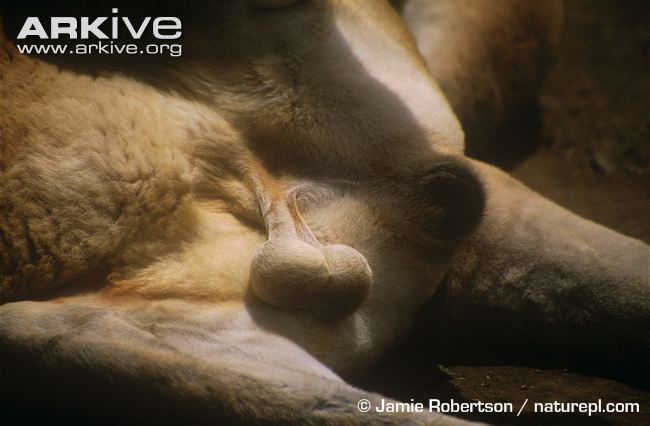
External Testicles and the Cremaster/Dartos Reflex


What would Youtube and America's Funniest Home Videos be without clips guys getting hit in the crown jewels? (Wouldn't it be interesting to know what percent of youtube views are related to this genre?)

As you well know, male humans (and other boreotherian mammals, et al) have external testicles because their optimal temperature for sperm production is below that of our core body temperature--about 94 degrees Fahrenheit.  Why, though?


  1. Optimal Enzyme Temperature
    1. Enzymes are molecule machines that help reactions take place.  Enzymes have optimal temperatures because if they are outside of that golden medium then they change shape and don't work as well (or at all).  There are enzymes that are involved in spermatogenesis like spermatogenic DNA polymerase beta and recombinase activities that are optimized at 94 degrees F.
    2. Other temperature enzymes might not have evolved yet.   The obstacles for their evolution might be quite unlikely--you'd need a new enzyme and mutations that would cause internal testicles at the same time.   Seems easier to just keep doing what we're doing.
    3. Maybe our enzymes are a throw back to cold blooded reptile, lower temp mammal or before.  So, we got hot and our testicles got to the  business of  moving.
  2. Maybe it's a throw back to ridiculous sperm competition.
    1. Perhaps there was sperm competition so intense that one of our ancestors had to move its testicles outside of its body to house them and now it's just stuck around.
  3. Maybe it's protection from internal body cavity pressures changes like from galloping, running, etc.
Since we're kind of a menagerie of evolutionary mementos having external testicles can pose some negative consequences for humans, just one of which is inguinal hernias. Male testes descend from inside the body after birth. Why aren't they on the outside in utero? Because males and females are made from the same evolutionary template. Male testes come down from roughly where the female ovaries are (their equivalent) through the inguinal canal. This usually works fine, but because evolution isn't perfect it sometimes causes some nasty hernias to come through that same hole. I'll share the most PG of the pictures I found (freaky thing to Google).
Because our external temperature is not static, nor can our testicles be.  There are two  main muscle groups that control the movement of the testicles closer and further from our warm bodies.

  • Dartos Muscle
    • This is a layer of muscle right below the skin of the scrotum.

Dartos muscle can be seen as the red, muscular layer right below the skin.
  • Cremaster Muscle
    • Provides much of the up, down lift to thermoregulate and protect.


  • Cremaster and Dartos Reflexes
    • So, evolution has a problem.  It wants our testicles to be cool, but the further out the more vulnerable they become.  The musculature above isn't just to regulate temperature.  This can easily be demonstrated by the cremaster and dartos reflexes.  Many men (and women by extension) are unaware that if the inside of the thigh is touched it causes the testicle of that side it rise closer to the body for protection.  Many men will also relate to feeling a sympathetic pain if they hear/see something extremely painful or disgusting.  I don't know if this is cremaster or something else, but I've heard from others that they experience it.  (Comment anonymously below if you know what I'm talking about, can recount a time and physiological response.)

Dolphins--are warm blooded, but with internal testicles.  Apparently they actually have veins that run near the testicles after having circulated below the skin to cool down--a.c. for their testes.

Pictures from here, here, here, here, here.

Monday, December 27, 2010

Why Do Dogs/Cats Have Wet Noses??

Since a dog's nose doesn't have sweat pores, it's moisturized, aside from licking, by capillary action in the rivulets of the nose.


If you've ever watched a good cops and robbers chase movie, or played tag as a kid you might understand how that the best place to hide is often in plain sight - make it so obvious that no one would look there.  That's also what makes for a great twist at the end of a movie - it's right in front of you and you'd never guess it - brilliant.

Stick Man is 'under'-'standing'
I even love this in words.  It's great to learn something about a root word and be in awe that you never thought about that before.  I'll give an example from the above paragraph (completely unplanned)--understand.  Our language is loaded with words like this that you probably never, ever think about how it's the combination of 'under' and 'stand' - when you understand you are analogically standing beneath the idea.  Brilliant.  So obvious.

It's the same with this question.  I'm captivated because it's so obvious.  Why have I never thought about or questioned why dogs and cats (and plenty of other mammals) have wet noses (rhinariums)!!!


Let's look at some possibilities and consider how they could be falsified (I've been convicted that I need to add falsification tests to more of my blogs). (Let me say that I'm biased and clearly have one favorite answer)

  • Thermoregulation - the nut shell: "Dogs and cats have wet noses like we sweat - to cool off."
    • Compare cold and warm weather wet noses.  They should be bigger in hot weather climates and smaller farther north/higher in elevation.
    • Measure heat coming off nose.  It should be significant if that's the purpose of the rhinarium.
    • Consider blood flow levels and the shape of the organ in comparison to other 'known' thermoregulation organs.  Consider the ears of a jack rabbit or elephant or the spinal ridge of a dimetrodon.  Each of these organs got big, thin and heavily vasculated to radiate heat out.  Those examples are quite different from a wet nose.
African elephants have bigger ears because they have a greater need to deal with excess heat.

    • Lick Hypothesis - *Winner of the Tautology Award.  Talk about cart before horse.  The websites that I saw this at (which were many) have not thought through this.  Giraffe necks are long because they grew alot.  Duh.

    • Smell Catcher
      • Identity/count olfactory receptors or channels to receptors in comparison to known receptor zones.
      • Consider why being able to passively smell (as opposed to actively breathing in the scent) might be an advantage - high wind environments, low breathing rates...
      • Interesting article on the rhinarium's smell sorting function.

    • Weathervane - related question: why do many animals have two nostrils, but they're on the same side of the head??  One might assume we have two nostrils in order to sense the direction a smell is coming from.  This is why you have ears on each side of your head.  Your brain does split second calculations comparing which ear heard first and loudest.  Have you ever had the experience where you hear something unexpected directly behind you and it sounded like it was in front of you?  It's rare, but I have.  Like abnormal psychology has much to teach us about normal brain function, so can a slight malfunction of our normal sound directionality perception teach us how important and powerful having ears on each side of our head to determine the location of the sound. 
      • Count/identify temperature and touch nerves in comparison to other parts of the skin.
      • Is the wet nose omnidirectional?  If it's not then it wouldn't be a very effective weathervane.  It needs to be able to sense zephyrs of wind from many vantage points and contrast the evaporative coolness on different sides.
      • Anesthetize one and later both sides of the outside of the nose.  See if directionality of smelling is inhibited or if animal is misled to the wrong direction.  As in, if the right side is anesthetized that the animal goes to its left to find smell source since all wind will seem to come from the left.
      • Anesthetize the olfactory cells in one side of nose.  See if directionality of smelling is inhibited.
      • Create windless environment and see if directionality of smelling is inhibited.
      • Do animals that breath through one nostril at a time (like humans, supposedly we alternate nostrils every 6 hours) need directional smelling less or have other adaptations to deal with the problem?  Is this alternating form of breathing widespread?
      • Are animals that have dry noses more likely to have nostrils that face opposite directions to make up for a directionality sensing deficit? 
    A theoretical sketch of the possible advantages and disadvantages of having nostrils on opposite sides of an organisms head versus a nose with a built in weathervane.
    *Related bonus question: why do many species with rhinariums have a slit running on the outside of the nose (see bear picture above)?  I've  heard that many species have a flap within their nasal passage that directs out going air out the sides and inward throw the middle to flow over the smell receptors.  This helps avoid the problem of double smelling or smelling something coming out of your lungs.  Fascinating!
        Wet noses are so largely universal in mammals that the above exception is so notable that it's become a part of its name: hairy-nosed wombat.  Certain primates are another another exception: http://en.wikipedia.org/wiki/Haplorrhine


        Images are from:  here, here, here, here, here, here, and here